Years 5–6
Students explain, investigate, apply and practise wellbeing concepts and strategies in familiar situations.
Supporting students to build emotional awareness, body respect, resilience, regulation, stress management, connection and wellbeing through evidence-informed lessons, teacher resources and practical tools.

Charlie & Frank are here to guide and support you along the way.
The Challenge
Schools are increasingly supporting students experiencing stress, anxiety, emotional overwhelm, friendship challenges, reduced resilience and difficulties managing everyday pressures.
While schools recognise the importance of wellbeing, many teachers report limited time, confidence and resources to deliver structured wellbeing education consistently.
Reset Space was created to bridge this gap — practical, evidence-informed wellbeing lessons that can be delivered by existing staff in a sustainable and accessible way.
Reset Space for Schools
A practical, evidence-informed wellbeing program for Years 5–8 students.
Reset Space supports students to build the emotional, social and thinking skills they need as they move into adolescence.
Across three modules and eighteen lessons, students learn practical strategies to understand themselves, regulate emotions, navigate relationships, manage challenges and take positive steps towards their goals.
Three modules. Eighteen lessons. Skills for life.
Our Approach
Reset Space is informed by Cognitive Behavioural Therapy (CBT), Acceptance and Commitment Therapy (ACT), mindfulness, self-compassion, strengths-based practice and positive psychology. These approaches support students to understand emotions, notice thinking patterns, regulate stress, practise helpful self-talk, build body respect, strengthen self-worth and take small, meaningful steps toward wellbeing.
Encourages students at various stages of their wellbeing journey, whether they are building early awareness or strengthening existing skills.
Focuses on strengths, growth and what is possible — helping students develop a kinder, more hopeful relationship with themselves.
Created for school communities, with language, activities and examples that respect different backgrounds, identities and experiences.
Teaches strategies students can use in the classroom, playground and beyond — so wellbeing skills become part of everyday life.
Program Structure
Schools can choose to implement the curriculum in a way that best suits their context.
Understand your emotions. Build healthy friendships.
Students develop the foundations of emotional awareness, regulation and connection.
Focus Areas
Feel it. Understand it. Connect with others.
Train your brain. Respect your body.
Students develop greater self-awareness and learn practical ways to navigate the internal and external pressures of adolescence.
Focus Areas
Understand yourself. Trust your mind and body.
Live with purpose. Step towards your goals.
Students begin to look ahead, identify what matters to them and develop the confidence to take meaningful action.
Focus Areas
Discover what matters. Take action. Step forward.
Australian Curriculum
Reset Space supports key elements of the Australian Curriculum Version 9.0 Health and Physical Education Personal, Social and Community Health strand.
The same core wellbeing framework can be used across Years 5–8, with the questions, scenarios and learning expectations adjusted to suit each developmental stage.
Students explain, investigate, apply and practise wellbeing concepts and strategies in familiar situations.
Students extend their learning by analysing influences, devising and evaluating strategies, and applying them to more complex personal and social situations.
Across the three modules, students explore emotional regulation, relationships and belonging, identity and strengths, digital balance, comparison and body respect, values, contribution, goals, healthy decisions and courage.
Partner schools receive detailed curriculum mapping showing the strongest curriculum links and differentiated learning expectations for every lesson.
Alongside its Health and Physical Education curriculum links, Reset Space supports the development of the Australian Curriculum's Personal and Social Capability. Across the program, students develop skills within all four elements of the capability.
The Reset Framework
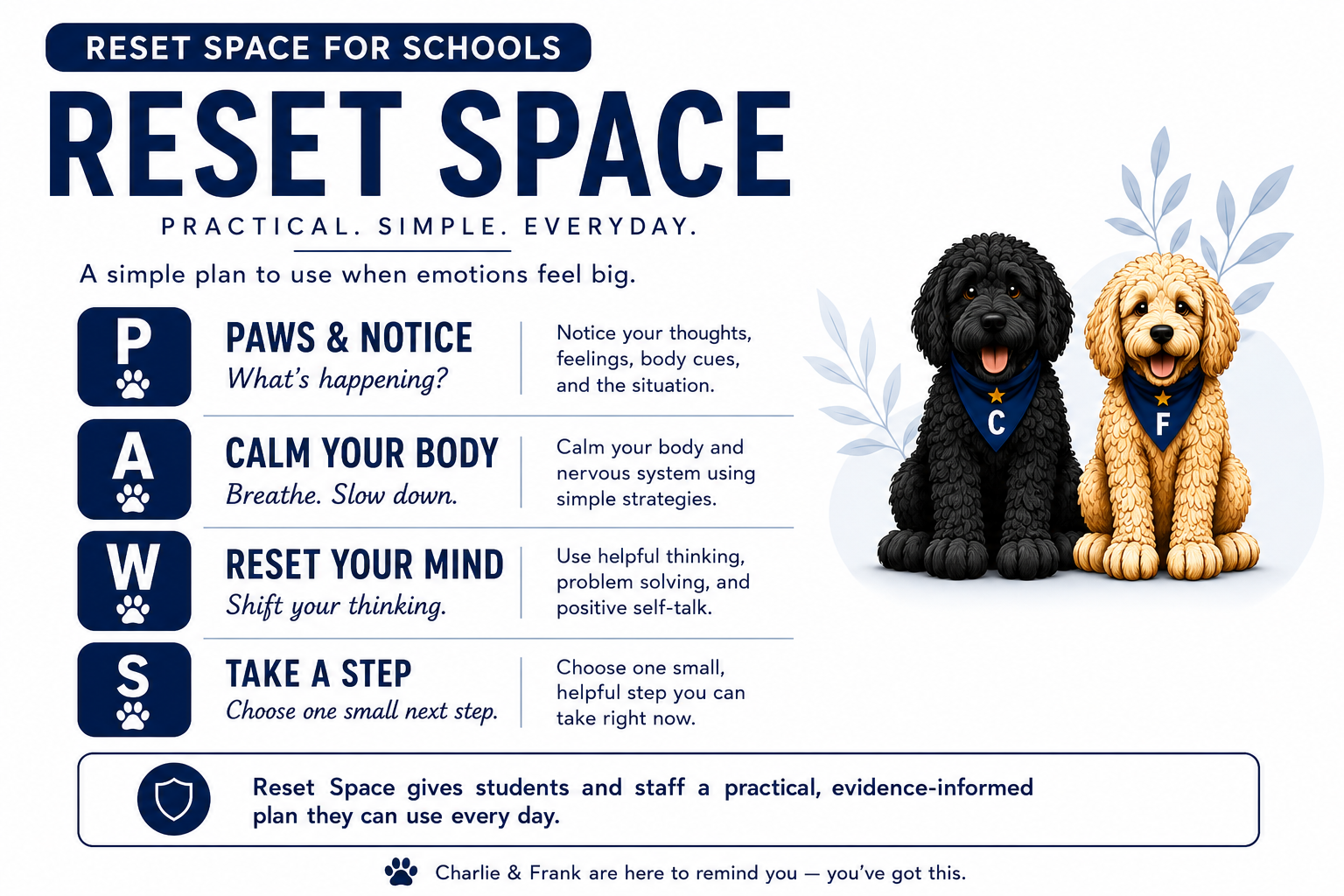
Every module is built on the PAWS framework — a simple plan students can use when emotions feel big: Paws & Notice, Calm Your Body, Reset Your Mind, Take a Step.
Why Reset Space Matters
The transition into adolescence brings significant emotional, social and developmental change. Reset Space gives students practical tools they can use not only at school, but in everyday life.
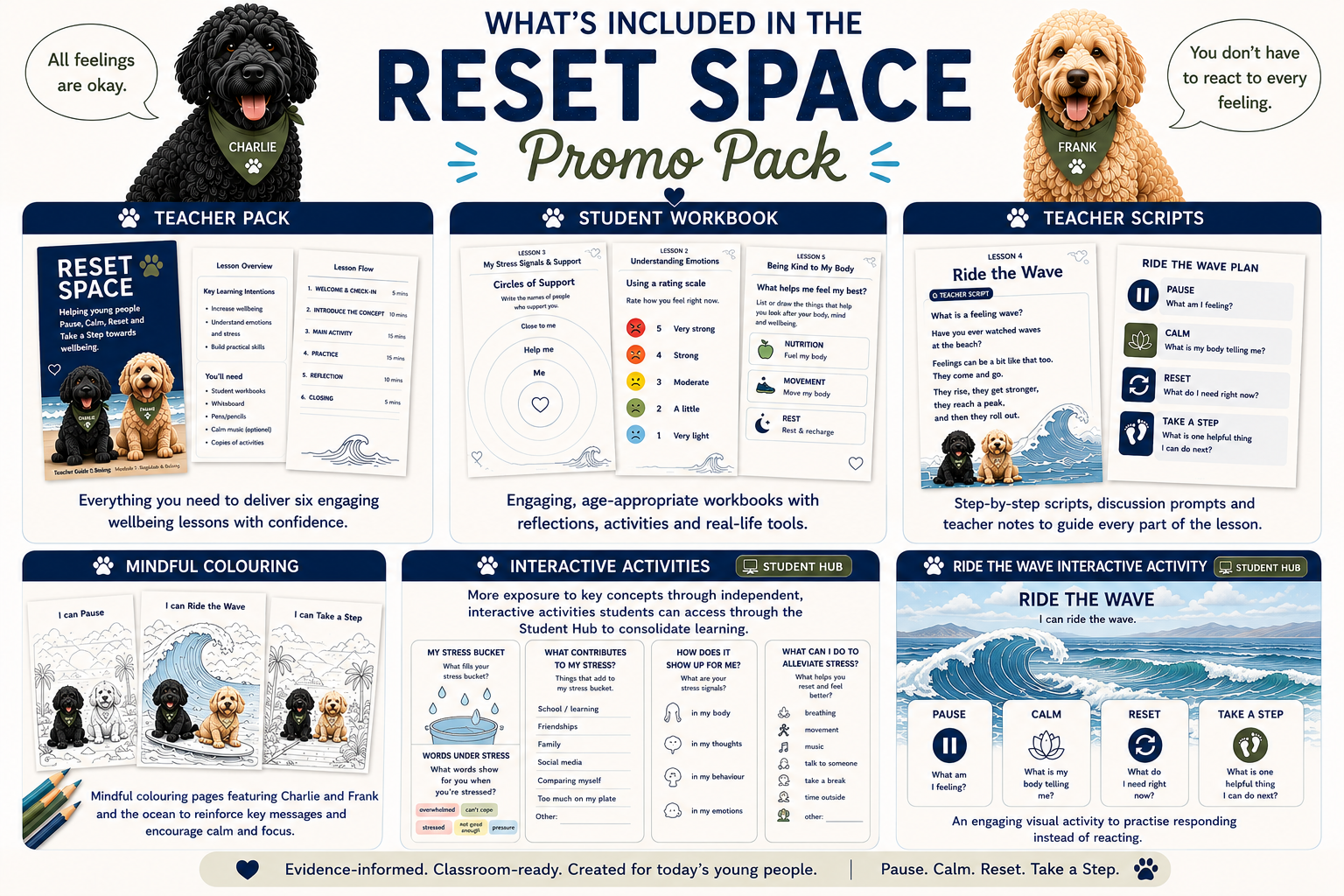
What's Included
Student Outcomes
Practical, transferable skills that support every aspect of school life — and beyond.

Why Schools Choose Reset Space
Reset Space has been developed by Kylie Donnolley, a registered psychologist and former educator with more than 27 years of experience supporting students, families and school communities.
"Kylie is a registered psychologist and educator who has spent decades working alongside students, teachers and families. Reset Space brings together psychological science and practical educational experience to support student wellbeing in meaningful and sustainable ways."
Research Foundation
Reset Space draws on contemporary research in:
The program has been developed by a registered psychologist and educator with extensive experience working in school settings.
Support for Staff
Reset Space is designed to build staff confidence and capacity. Rather than relying on external presenters, the program provides schools with resources, training and support so wellbeing education can become embedded within the school culture.
Wellbeing Companions
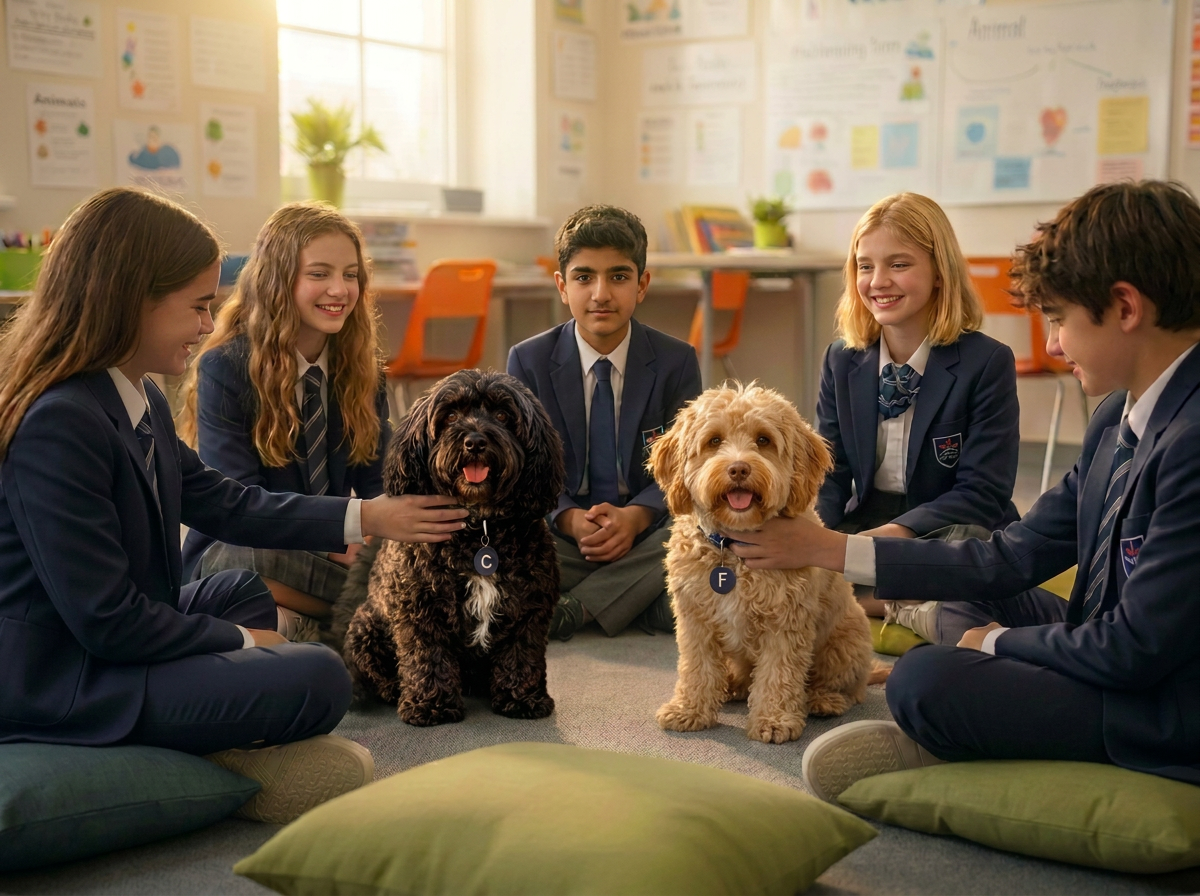
Charlie and Frank are the friendly wellbeing companions woven throughout Reset Space. They help introduce wellbeing concepts in a safe, engaging and relatable way — encouraging reflection, curiosity and connection.

Charlie is a small black Lhasa Poo with a calm, steady presence. He is older, wiser, and grounded. He doesn’t rush — he notices, pauses, and responds thoughtfully.
Charlie used to be a therapy dog working in schools, supporting young people through challenges. He’s now retired, but still quietly shares what he knows.
He helps with…
Charlie’s favourite tools
Sometimes feelings rise up quickly and feel intense — like a wave. Charlie teaches that instead of fighting the feeling or trying to push it away, you can ride it. Feelings come, rise, and pass — even when they feel strong.
Thoughts can come and go like plates on a sushi train. Some are helpful, some aren't. Charlie reminds you that you don't have to pick up every thought — especially the ones that feel sticky or unhelpful. You can notice them… and let them pass.
Sometimes Charlie keeps an eye on Frank, gently guiding him when his emotions take over.
Frank is a small, cute Cavoodle puppy with creamy beige fur and soft ruby tones, light warm eyes, and an olive-toned nose.
He is curious, energetic, and easily excited. Sometimes his feelings get big and hard to manage — especially when things feel uncertain or when he's on his own.
Frank is learning…
His favourite tools
Sometimes when the “mailman arrives,” Frank wants to react quickly — but he's learning to pause and remind himself: “I don't need to go into alarm mode.”
Frank has recently been spending time in the therapy room, helping kids learn how to understand and manage their emotions too.
“You don't have to do this perfectly — just like Frank, you're learning. And Charlie will be here to help you slow things down when you need it.”

Discover how Reset Space can support student wellbeing while building staff confidence and capacity.